
Someone who was going to buy from you asked ChatGPT which company to use. It named three. You were not one of them. There was no click, no session, no line in analytics. The deal was decided and you never knew it happened.
If you run the company rather than the marketing, this page is the version of the answer without the vocabulary lesson.
First, the thing almost everyone gets wrong
The instinct is to write more blog posts. It feels like the obvious move: rank higher, get noticed, get named.
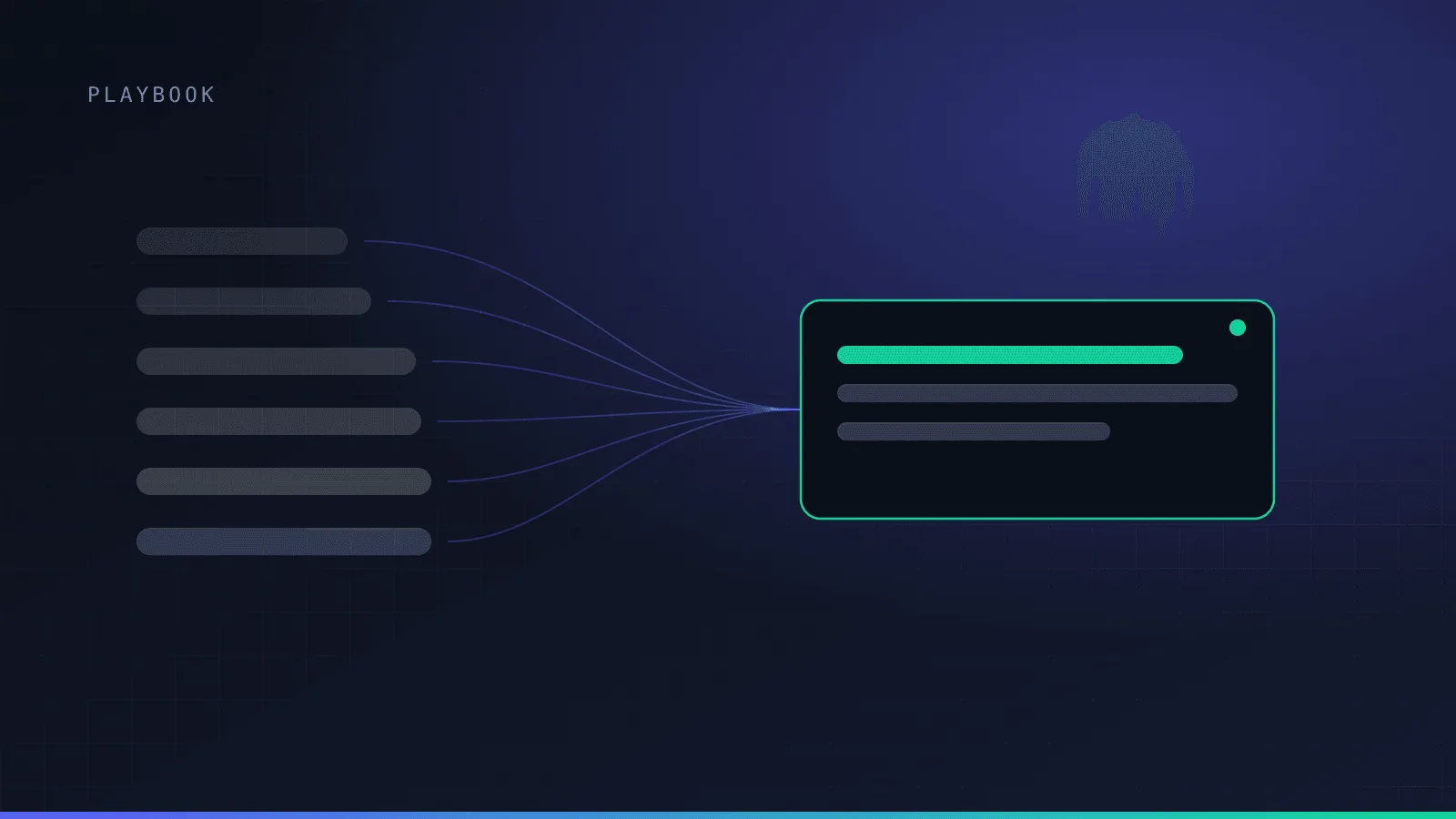
That is not how the shortlist gets built. ChatGPT is not reading your website and deciding you are good. For most commercial questions it is reading a small handful of third-party pages, often the same fifteen to twenty URLs across an entire category, and assembling an answer from them. In practice those are:
- “Best X” and “top ten X” listicles, frequently written by one of the vendors
- Review platforms like G2 and Capterra
- Reddit threads where somebody asked your buyer’s exact question
- YouTube explainers
- Industry roundups and directories
If your company is absent from all of those, you will not appear in the answer no matter how good your own pages are. If your competitor appears in six of them, they will be named constantly, even with a worse product and a worse site.
That reframes the whole job. You are not optimising a website. You are trying to change what a small set of pages elsewhere on the internet say about your category.
Step 1: check you are not blocking the crawlers (five minutes, free)
Before anything else. Open yourdomain.com/robots.txt in a browser and look for
these names:
GPTBot— OpenAIOAI-SearchBot— OpenAI’s search crawlerClaudeBot— AnthropicPerplexityBot— PerplexityGoogle-Extended— Google’s AI training and grounding control
If any is followed by Disallow: /, you are invisible to that engine by
instruction, and no amount of content will fix it. This happens more than you would
think. Agencies add these blocks during AI-scraping panics, security vendors add
them by default, and nobody tells the founder.
This is the single best-documented lever in the entire field. It is also free and takes five minutes. Do it before you spend a pound on anything else.
Step 2: find out what the engine is actually citing
You cannot get onto the source list without knowing what is on it.
Ask ChatGPT the ten questions your buyers ask before they have heard of you. “Best inventory software for a small warehouse.” “Alternatives to [your main competitor].” Ask each one three times in a temporary chat, because the answers vary run to run, and write down every source it links or names.
After thirty answers a pattern appears. The same few domains keep coming back. That list is your actual competitive landscape, and it is usually nothing like the one in your head. We wrote the full method for measuring this, including how to turn it into a number you can track.
Step 3: get accurately represented on those sources
This is the work. It is slower than writing a blog post and it is the part that moves the answer.
Review platforms. If G2 or Capterra keeps appearing, your profile there needs to exist, be complete, and have real reviews. Ask your happiest customers. This is the most mechanical, most reliable item on the list.
The listicles. Most “top ten” pages in any category are maintained by someone who will update them. Some are pay-to-play, which you should know before you email. Many are not, and a polite note from a real company that genuinely belongs on the list works more often than people expect. Find who publishes the ones that keep getting cited, and ask.
Reddit and communities. Engines lean on Reddit heavily because it reads as first-hand experience. The only approach that works is being genuinely useful in places where your buyers already are, under a real identity, answering questions you actually know the answer to. Astroturfing gets detected, gets you banned, and the removed thread stops being cited anyway. We wrote about why Reddit gets cited so much and how to be present without wrecking it.
Fix what is wrong about you. Sometimes you are already mentioned somewhere and the information is out of date, or attached to a product you discontinued. Correcting that is faster than earning a new mention and it removes a reason not to recommend you.
Step 4: now make your own site quotable
Your own pages do matter. They matter later than people think, and they matter in a specific way: the model needs to be able to lift a clear claim without guessing.
- Answer in the first sentence of each section, before the context. A page that warms up for four paragraphs gets skipped for one that answers.
- State facts in short sentences that survive being quoted alone. A hedged claim buried mid-paragraph cannot be lifted.
- Say plainly who you are for. “Built for regulated industries” gets you named on the queries that convert. “Solutions for modern business” gets you named on nothing.
- Publish the comparison page. When someone asks “best X” or “alternatives to Y”, the model needs a source for the head-to-head. If you write an honest one that names real competitors, you can become that source. Most companies will not do this, which is exactly why it works.
- Add schema (Organization, Product, FAQ) so your claims exist in a machine-readable form as well as prose.
- Go deep enough to be worth citing. We audited our own site and found 23 of our 27 articles were under 800 words, while every page of ours that reached page one on a competitive term was over 1,100. Short posts are cheap to produce and easy to ignore.
What will not help
llms.txt will not help. It is widely recommended and no major engine honours
it. Google has said so explicitly. We grade it as refuted in our
evidence register despite it being a convenient thing for an agency to
sell.
Keyword stuffing will not help. These systems are good at discounting low-signal promotional text.
One-off checks will not help. Answers vary between runs. If you check once, get named, and conclude you are fine, you have measured noise.
Publishing volume alone will not help, which is the expensive lesson. We published three rounds of content on our own site. Google impressions went up more than fivefold. Our share of AI answers went down, from 12.8% to 11.1%. More pages on your own domain do not buy you a place on someone else’s.
What this looks like in order
- Check
robots.txtfor the five crawler names. Today. - Run thirty questions across the engines and write down every source cited.
- Claim and complete your review-platform profiles. Ask for reviews.
- Contact the publishers of the two or three listicles that keep getting cited.
- Fix the outdated information about you that already exists out there.
- Then improve your own pages: answer-first, quotable, deep enough, with an honest comparison page.
- Re-run the same thirty questions monthly. Same questions, or you have no baseline.
Steps 1 through 3 cost almost nothing and are where most of the early movement is. Step 6 is where most companies start, which is why most companies wait a long time to see anything.
A caveat we would rather you heard from us
Much of what is sold as GEO has thin evidence behind it. The widely-quoted “40% uplift” figure comes from a 2024 paper measured on GPT-3.5 using a redistributive share metric, and a 2025 benchmark found most published content tactics largely ineffective. Both papers are in our research library with what they actually show. Google’s own position is that optimising for AI search is still just SEO. We keep an evidence register grading every claim in this field, including the ones that cost us money to admit.
The parts we are confident about are the boring ones: crawler access, being present on the sources that get cited, and being accurate wherever you already appear.
If you want to see where you stand before deciding any of this is worth your time, run the free visibility check. Send your domain and two competitors and we will show you which questions name you, which name them, and which sources the engines are pulling from in your category.
Found this useful? Run your own domain through our tracker, the fastest way to see where you stand.
Get a free visibility check